


Open407I-C Zestaw rozwojowy z STM32F4 STM32F407IGT6
Cena regularna:
 ・Kup teraz i zapłać za 30 dni

towar niedostępny

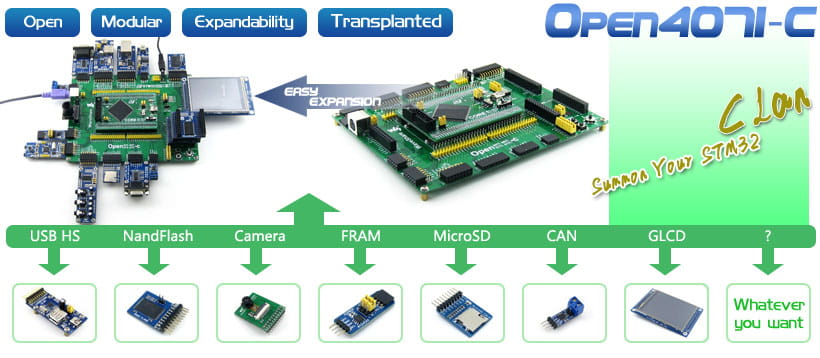
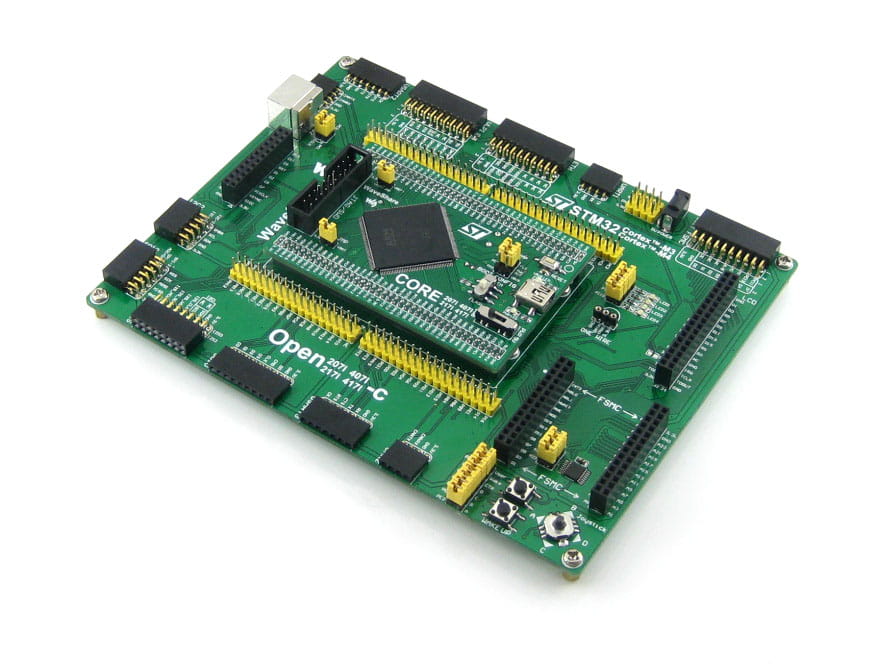
Open407I-C platforma rozwojowa z mikrokontrolerem STM32F407IGT6 składająca się z płyty bazowej do której podłączamy wszelkie peryferia oraz płyty Core407I z mikrokontrolerem, pamięcią SDRAM i blokiem zasilania.
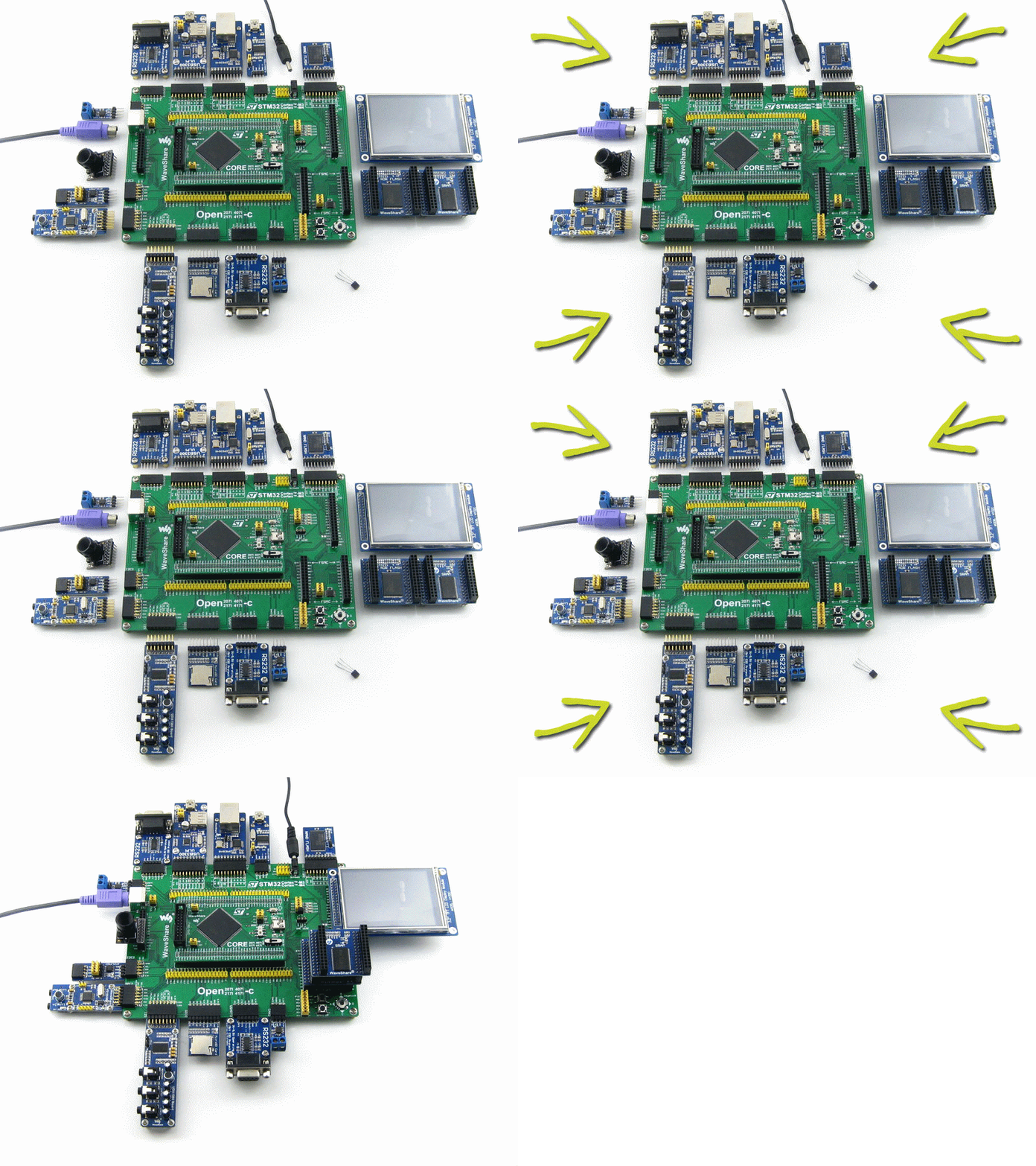
Open407I-C umożliwia rozbudowę o moduły peryferii firmy waveshare np. wyświetlacze LCD, moduły ethernet, dodatkową pamięć, kamery itp. rozbudowę ułatwiają dedykowane złącza.
Programowanie mikrokontrolera możliwe jest za pomocą portu USB komputera - adapter USB -> TTL znajduje się w zestawie.
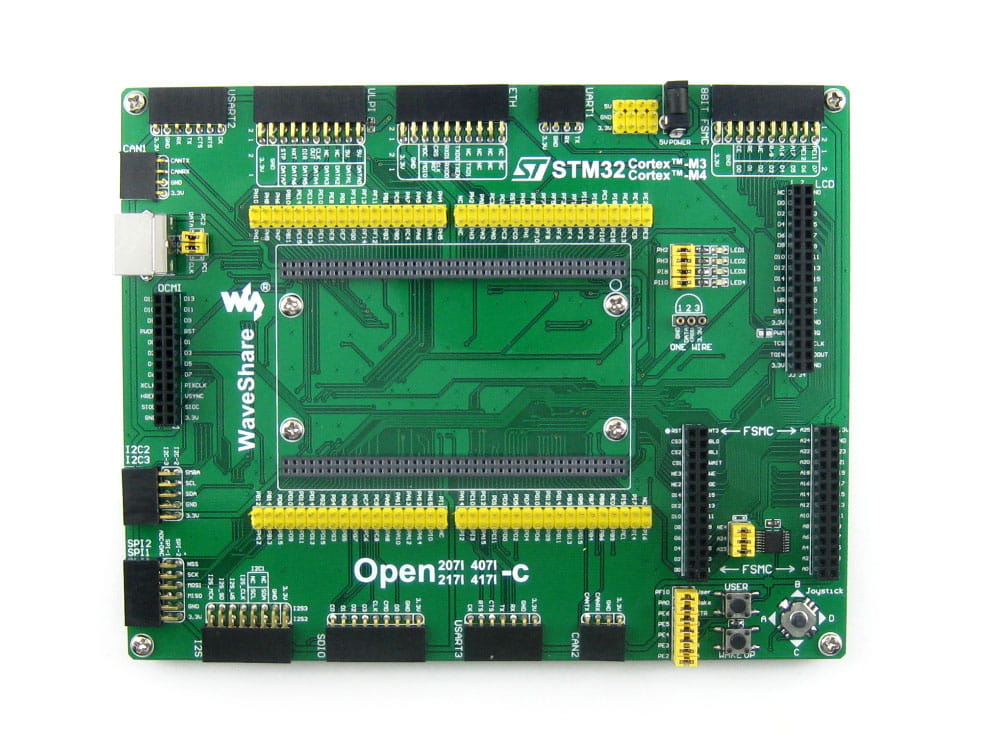
Płyta bazowa:
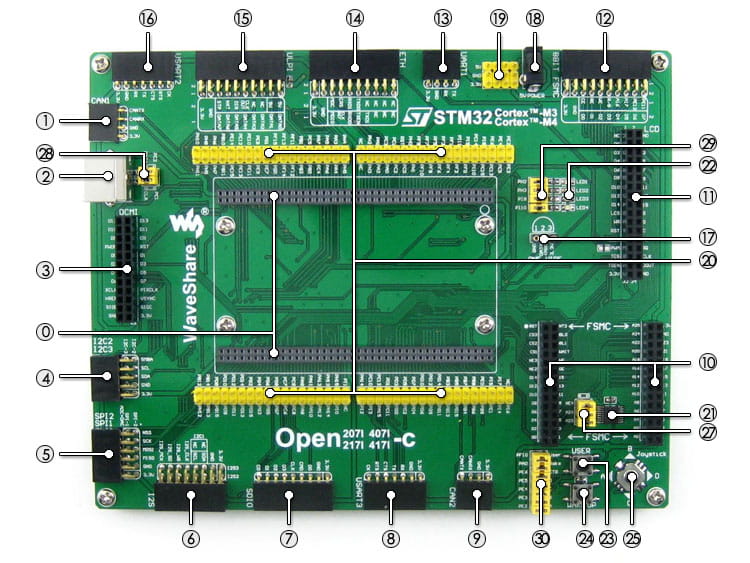
- MCU core board connector: for easily connecting the Core407I
- CAN1 interface: communicates with accessory boards which feature the CAN device conveniently
- PS/2 interface: easily connects to PS/2 keyboard and/or mouse
- DCMI interface: for connecting camera module
- I2C2 / I2C3 interface: easily connects to I2C peripherals such as I/O expander (PCF8574), EEPROM (AT24Cxx), etc.
- SPI1 / SPI2 interface
- easily connects to SPI peripherals such as DataFlash (AT45DBxx), SD card, MP3 module, etc.
- SPI1 features AD/DA alternative function, supports connecting AD/DA module as well
- I2S2 / I2S3 / I2C1: for connecting I2S peripherals, such as Audio module
- SDIO interface: for connecting Micro SD module, features much faster access speed rather than SPI
- USART3 interface: easily connects to RS232, RS485, USB TO 232, etc.
- CAN2 interface: communicates with accessory boards which feature the CAN device conveniently
- 16-bit FSMC interface: easily connects to peripherals such as NorFlash, SRAM, etc.
- 16-bit FSMC + SPI interface: for connecting touch screen LCD
- 8-bit FSMC interface: easily connects to peripherals such as NandFlash, Ethernet, etc.
- UART1 interface: easily connects to RS232, RS485, USB TO 232, etc.
- Ethernet interface: easily connects the MCU to ethernet network by using an additional ethernet module
- ULPI interface: for connecting high-speed USB peripheral (the STM32F407I integrates USB HS controller without any PHY device)
- USART2 interface: easily connects to RS232, RS485, USB TO 232, etc.
- ONE-WIRE interface: easily connects to ONE-WIRE devices (TO-92 package), such as temperature sensor (DS18B20), electronic registration number (DS2401), etc.
- 5V DC jack
- 5V/3.3 V power input/output: usually used as power output, also common-grounding with other user board
- MCU pins connector: all the I/O ports are accessible on expansion connectors for further expansion
- 74LVC139: used for FSMC expansion, make it possible to connect multi devices through FSMC at the same time, such as LCD and NAND FLASH
- LEDs: convenient for indicating I/O status and/or program running state
- User key: convenient for I/O input and/or interact with running code
- Wake-Up button: wake up the STM32 MCU from sleep mode, also used as regular user key
- Joystick: five positions
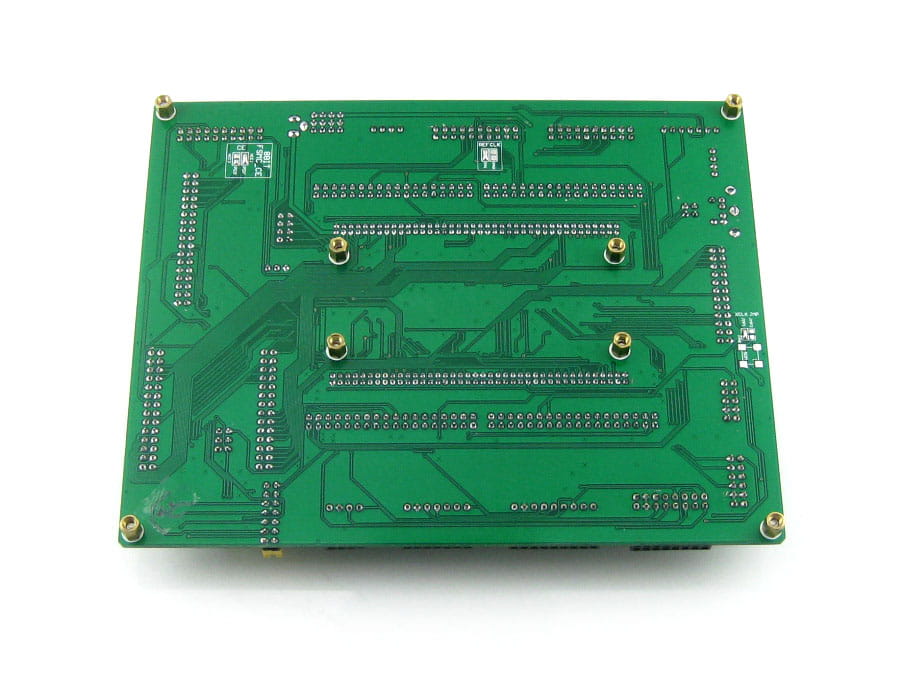
- Crystal empty slot (on bottom side): for soldering 50M active crystal oscillator, which'll provide clock to DCMI
- 74LVC139 selection jumper: for FSMC chip select
- PS/2 jumper
- LEDs jumper
- User key / joystick jumper
For jumpers 27-30:
- short the jumper to connect to I/Os used in example code
- open the jumper to connect to other custom pins via jumper wires
Moduł Core407I:
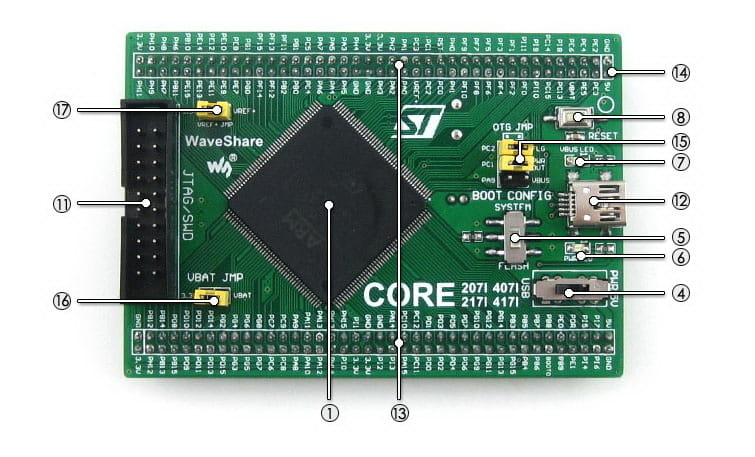
- STM32F407IGT6:the high performance STM32 MCU which features:
- Core: Cortex-M4 32-bit RISC
- Feature: a full set of single-cycle DSP instructions
- Operating Frequency: 168MHz, 210 DMIPS/1.25 DMIPS/MHz
- Operating Voltage: 1.8V-3.6V
- Package: LQFP176
- Memories: 1024kB Flash, 192+4kB SRAM
- MCU communication Interfaces:
- 3 x SPI, 4 x USART, 2 x UART, 2 x I2S, 3 x I2C
- 1 x FSMC, 1 x SDIO, 2 x CAN
- 1 x USB 2.0 high-speed/full-speed device/host/OTG controller with dedicated DMA, ULPI and on-chip full-speed PHY
- 1 x 10/100 Ethernet MAC
- 1 x 8 to 14-bit parallel camera interface
- AD & DA converters: 3 x AD (12-bit, 1μs, shares 24 channels); 2 x DA (12-bit)
- Debugging/Programming: supports JTAG/SWD (serial wire debug) interfaces, supports IAP
- AMS1117-3.3 (on bottom side), 3.3V voltage regulator
- MIC2075 (on bottom side), onboard USB power management device
- Power supply switch, powered from 5Vin or USB connection
- Boot mode switch, for configuring BOOT0 pin
- Power indicator
- VBUS LED
- Reset button
- 8M crystal oscillator (on bottom side)
- 32.768K crystal (on bottom side), for internal RTC with calibration
- JTAG/SWD interface: for debugging/programming
- USB interface
- as DEVICE, used for establishing USB communication between PC and the STM32 development board
- as HOST, connecting to USB devices such as USB flash drive through a USB OTG cable
- MCU pins expander, VCC, GND and all the I/O ports are accessible on expansion connectors for further expansion
- 5Vin pinheader, 5V power supply is required when using USB HOST/OTG
- USB HOST/OTG jumper
- short the jumper when using USB HOST/OTG
- open the jumper to disconnect from I/O port
- VBAT selection jumper
- short the jumper to use system power supply
- open the jumper to connect the VBAT to external power, such as battery
- VREF selection jumper
- short the jumper to connect VREF+ to VCC
- open the jumper to connect VREF+ to other custom pin via jumper wire

Wiki: Open407I-C
Zestaw zawiera:
- Open407I-C development board x 1
- PL2303 USB UART Board (mini) x 1
- USB type A plug to mini-B plug cable x 1
- USB type A receptacle to mini-B plug cable x 1
- 4-pin wire x 2
- 2-pin wire x 2
- USB power cable x 1
Przykładowe peryferia z którymi płyta współpracuje:
- USB3300 USB HS Board
- UDA1380 Board
- OV9655 Camera Board
- RS232 Board
- RS485 Board
- CAN Board
- 8 Push Buttons
- 5 IO Keypad
- AD Keypad
- AD/DA port
- FRAM Board
- DataFlash Board
- VS1003B MP3 Board
- NRF24L01 RF Board
- Micro SD Storage Board
- NandFlash Board
- NorFlash Board
- SRAM Board
- Ethernet Board
- 3.2inch 320x240 Touch LCD (C)
 Popularne produkty